
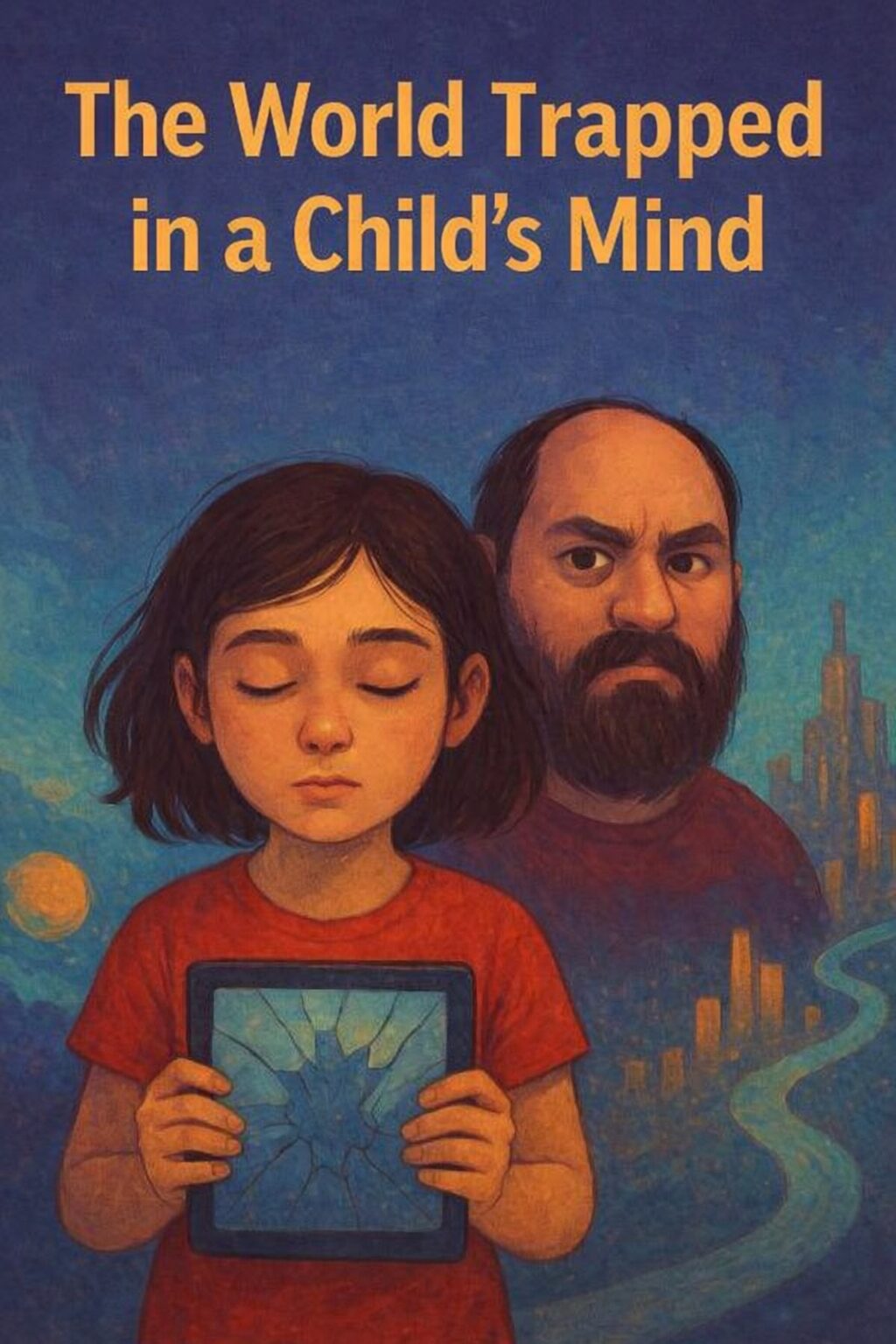
The first rift opened on a Tuesday that didn’t exist.
A vertical tear in the sky, thin as a razor cut, spilling white light and real traffic noise. From outside, someone yelled “holy shit, it worked!” and fell through.
A man in his thirties, faded Batman t-shirt, red eyes from sleepless days. He looked around, mouth open, and started laughing alone.
“I’m in. I’m really in.”
Geraldo watched from afar, leaning on a lamppost Lira had made the week before because she thought “lampposts are cool.” Lira, sitting on the ground drawing circles with her finger, looked up.
“Who’s that?”
“A tourist,” Geraldo said calmly. “Someone who paid to dream a little.”
The man stumbled closer.
“How long do I have?”
“Whatever you paid for out there,” Geraldo said.
“Twenty-four hours.”
“Then you’ve got twenty-four.”
The man cried. Literally cried. Then asked for a house. Geraldo glanced at Lira.
“Wanna give him a house?”
Lira shrugged. Imagined a simple yellow house with a porch. It appeared perfect. The man ran inside, yelling “thank you, God!”
That same week, more rifts opened.
Five. Ten. Fifty.
All kinds: bored rich people, terminal patients, teens who sold kidneys on the black market, widows wanting one more glimpse of their husbands. They all paid real money outside—Pix transfers to an account Geraldo controlled through a hacker who’d never entered. Prices rose weekly.
First day: 24 hours for five thousand reais.
Then: 72 hours for twenty thousand.
Then: a week for fifty thousand.
They arrived dazed, happy, desperate. Built shacks at first. Then houses. Then whole neighborhoods.
Lira found it funny.
“Look, Geraldo, they’re making a market!”
“Want a bigger market?”
“Yeah!”
The market became a mall. The mall became a city.
On the twenty-eighth tourist, Geraldo created the first currency.
Called it “light.”
It worked like this: every person brought a bit of real-world attention—strong memories, raw emotions, stories that made Lira pay attention. Make Lira laugh for ten minutes: a hundred lights. Make her cry: two hundred. Tell a story she’d never forget: a thousand.
With light you bought land. Cars. New bodies (taller, prettier, younger). Companions—girlfriends who never aged, friends who never betrayed.
Soon there were lines.
People telling bad jokes all day. People crying over dead dogs. People inventing family tragedies that never happened. Lira watched from a throne Geraldo made appear—a pink-cloud throne with color-changing cushions matching her mood.
At first she laughed easily.
Then she started tiring.
“It’s all the same,” she complained one afternoon, yawning. “Everyone wants the same thing.”
Geraldo knelt beside her.
“Then we add taxes. Anyone wanting more time pays tax. To keep you happy.”
“How much?”
“Eighteen percent of all light earned.”
Lira shrugged.
“Okay.”
The Dream Tax was born.
Fail to pay and you got expelled—the portal reopened and spat you back into the real world, naked, with only the memory of what you lived. Many came back begging. Paid double.
One woman brought her dead husband.
Not the body—the perfect memory of him. Made Lira cry for forty minutes straight recounting how he sang off-key at barbecues. Earned ten thousand lights. Bought an entire farm. Lived there with the copy until her time ran out.
A teen sold his whole college fund for a month. Started a gang. Tried taking over a neighborhood. Lira found it fun at first. Then bored. Geraldo expelled the whole gang in a blink.
By the fortieth day, population topped a thousand.
Bars never closed. Beaches appeared for extra payers. Rollercoasters that killed for real—but only if you wanted the thrill.
Lira no longer left the throne.
Sunken eyes. Skin too pale.
“It’s getting too big,” she said one night, voice hoarse.
Geraldo sat on the step.
“Want me to shrink it?”
She thought.
“No. Just… make it quieter sometimes.”
Geraldo created curfew. Break it and become a statue. Some statues still stand, decorating squares.
On the forty-fifth day, someone asked aloud in a packed bar:
“Hey, who really runs this place?”
Geraldo was at the counter, drinking beer that never warmed. Pointed to the distant throne where Lira played with a giant stuffed bunny that spoke in her father’s voice.
“Her. Always has been.”
Everyone looked. Saw the ten-year-old girl who barely moved anymore.
And believed.
Because it was easier to believe in a child than in a man who never slept, never ate, never blinked too long.
That night, Lira whispered to Geraldo, almost asleep:
“Do they like me?”
“They adore you.”
“Then it’s good.”
And the world kept growing.
More rifts. More tourists. More lights. More taxes.
And Lira, at the center of it all, grew quieter.
More goddess.
Less child.